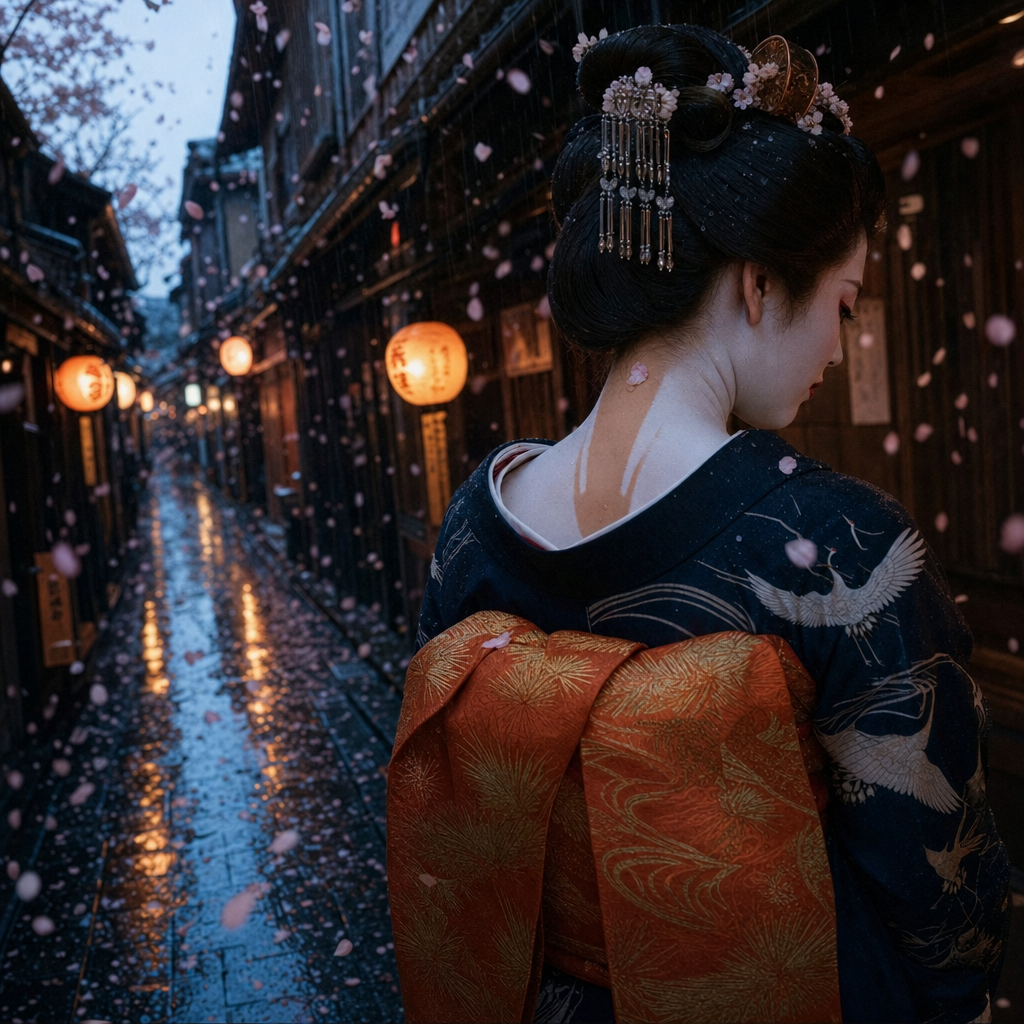
Lanterns Through Falling Sakura
- Model
- GPT Image 2
- Image
- 1024 × 1024 px
Prompt
Cinematic editorial photograph, documentary fashion hybrid, shot on 35mm film (Leica M11 with 50mm Summilux). Rear three-quarter view of a geisha walking through a narrow Kyoto alley during cherry blossom petal storm, captured with a photographer's documentary distance. Hero subject: a real young Japanese woman in full traditional geisha attire, photographed from behind and slightly to the right, her head turned in profile just enough to reveal the line of her jaw, the curve of her ear, the side of her carefully painted face — we see only a sliver of her crimson lip and lowered eyelashes, her eyes downcast in quiet contemplation, not looking at the camera, a documentary candid moment. Macro details visible in this angle: Nape of neck: the specific geisha convention of leaving the upper back of the neck unpainted — a triangular patch of natural warm skin exposed at the nape, contrasting dramatically with the white shironuri makeup painted around it in a classic three-pronged sanbon-ashi pattern, fine baby hairs at the hairline, one wet cherry blossom petal stuck to the exposed skin at the nape, water droplets from the rain beading on the napkin-white makeup above. Hair from the back: elaborate shimada chignon revealing the complex weaving of black hair, visible individual strands of gloss, a vintage tortoiseshell kanzashi ornament catching warm lantern light, silver bira-bira dangling pins with tiny silver flowers swaying slightly with her movement, cherry petals nestled deep in the hair creating pink flecks in black silk. Kimono back view (main frame subject): the wide obi sash fully visible — burnt-orange silk with gold-thread woven patterns of pine needles and waves, tied in an elaborate taiko-musubi bow, the knot perfectly rendered with visible thread weave. The deep midnight-indigo kimono silk of the body showing a painted scene of cranes in flight over silver rivers, the silk catching rain droplets that bead on the surface without soaking in. A single petal caught on her shoulder. Environment: she is walking through a narrow Kyoto pontocho-style alley at golden-hour-into-blue-hour transition, old wooden machiya buildings line both sides, warm orange paper lanterns hanging at various heights, wet dark cobblestones reflecting the lantern light in long streaks, gentle spring rain visible as vertical soft streaks in the air, a dense pink storm of cherry blossom petals falling from above and swirling in the air around her — petals in all focal planes creating layered depth. Composition: 2:3 vertical portrait orientation, subject placed on the right-third line walking left to right (actually away from camera into the alley), alley extending into deep one-point perspective vanishing point upper-left, leading lines from alley walls and wet ground pulling the eye inward, layered depth (foreground motion-blurred petals / sharp subject midground / alley vanishing background / soft rain and lantern bokeh far background), asymmetrical candid framing, slight dutch tilt for editorial energy. Lighting: mixed practical lighting — soft overcast daylight fading into blue hour from above, warm amber glow from paper lanterns providing warm rim light on the right side of the subject wrapping her figure, cool blue-grey ambient fill on the left side, strong warm-cool color duality, moisture in the air creating gentle atmospheric glow around every lantern. Color grading: Wong Kar-wai cinematic palette — dominant deep indigo blues of kimono and evening sky, rich burnt-orange obi and warm lantern glow, pink cherry petal drift, wet cobblestone blue-black reflections, restrained painterly saturation, rich shadow detail, slight grain, Kodak Vision3 500T cinema film emulation, "In the Mood for Love" color science, "Memoirs of a Geisha" atmospheric quality. Shot on Leica M11 with Summilux 50mm f/1.4 ASPH at f/2.8, available light handheld, 1/125s allowing petals to motion-blur. Mikiya Takimoto × Christopher Doyle × Alec Soth documentary editorial style, contemporary Japanese fashion editorial, Vogue Japan / Kinfolk magazine quality, authentic real Japanese woman not fantasy, candid cinematic moment, ultra-detailed realistic rendering.
Any aspect ratio
Overview
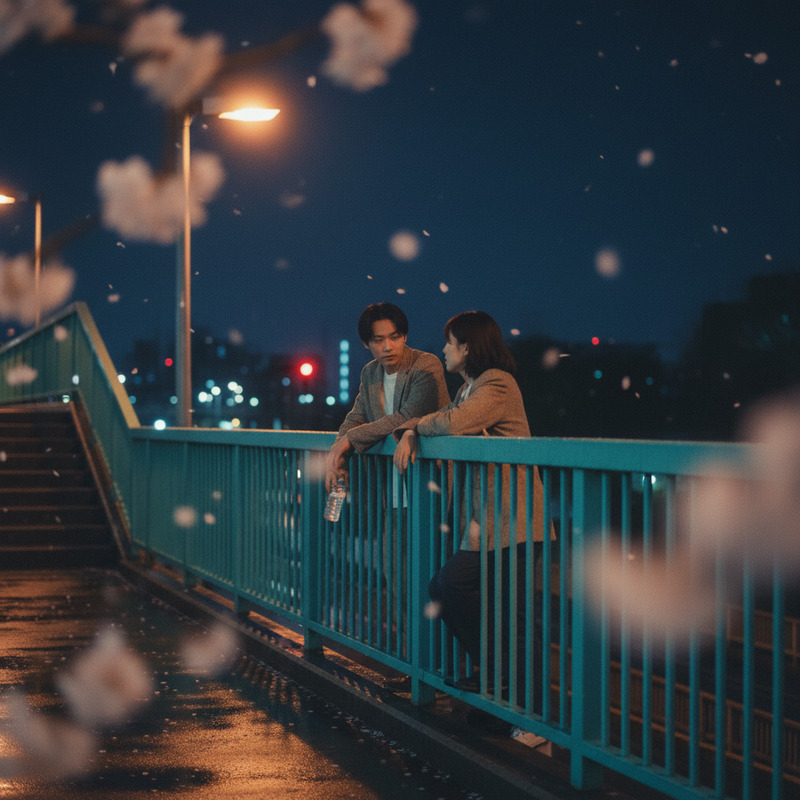
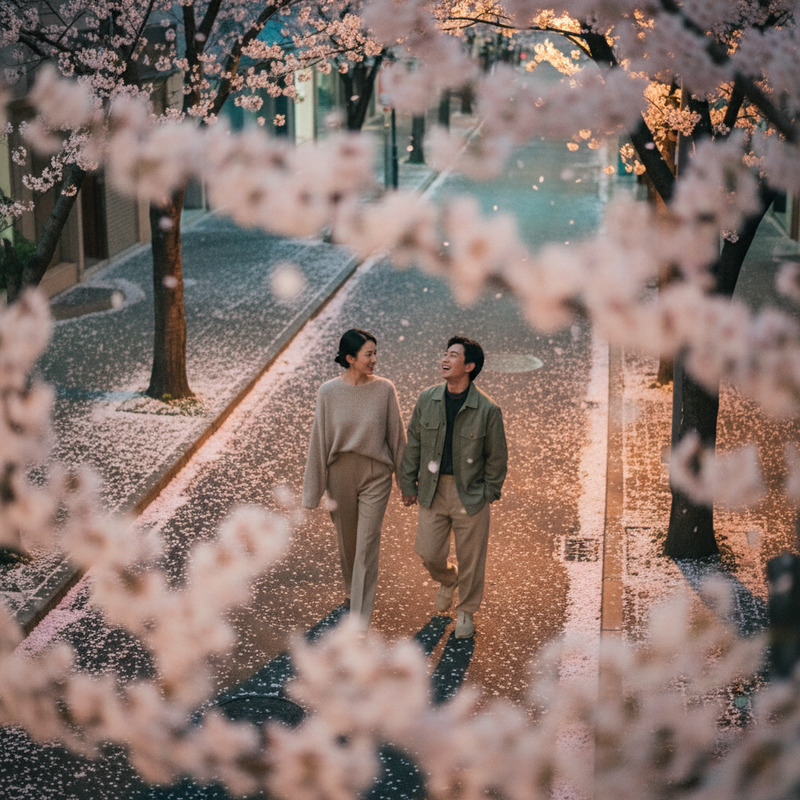
Lanterns Through Falling Sakura is an AI Image Editor template that transforms static images into vibrant, cinematic experiences. By incorporating elements of a cherry blossom storm, rain, and lantern-lit Kyoto alleys, this template captures a documentary-grade moment with exquisite detail.
What It Does
This template leverages the power of the gpt-image-2 model to deliver high-impact imagery. It adds motion-blurred cherry blossom petals, rain effects, and atmospheric lighting to your photos, providing a realistic emulation of cinematic film quality. With detailed geisha attire and intricate environmental details, it replicates the rich aesthetic of iconic Japanese photography.
Who It's For
Whether you're a photographer, editorial artist, or a fan of Japanese culture, this template is designed for creators seeking to enhance their images with depth and mood. It's perfect for fashion editorials, cultural documentaries, and personal photography projects that require a cinematic touch.
Summary
Lanterns Through Falling Sakura is ideal for anyone looking to enrich their photographs with a sense of place and narrative. AI Video Generator options further enable integration of these spectacular images into videos, expanding creative possibilities for storytelling in various formats.
How to Use
Choose

Customize

Generate

Use Cases
Fashion Editorials
Cultural Documentaries
Artistic Projects
Social Media Content
Best Practices
Choose the Right Source Image
Select a high-resolution image with clear details for the best results. Ensure the subject fits within the style frame.Refine the Environment
Use precise lighting and color grading options to enhance mood and match the authentic feel of Japanese photography.Experiment with Angles
Try different perspectives and compositions to see which works best for your storytelling goals.