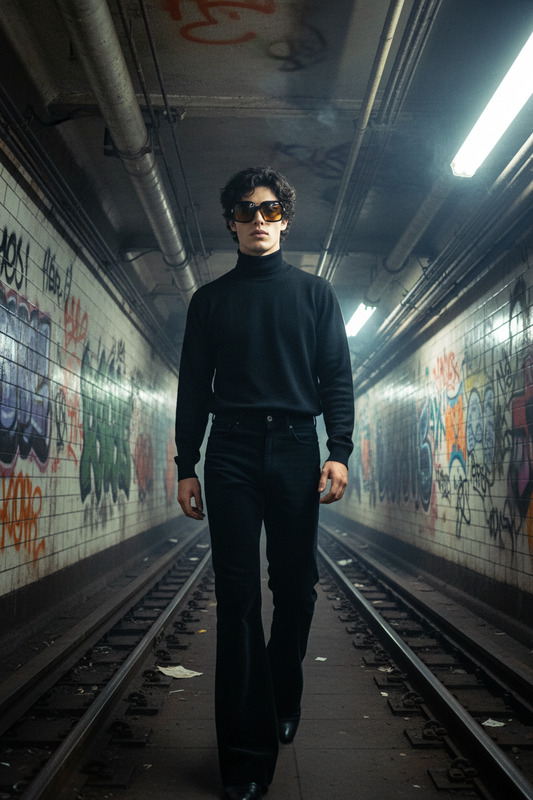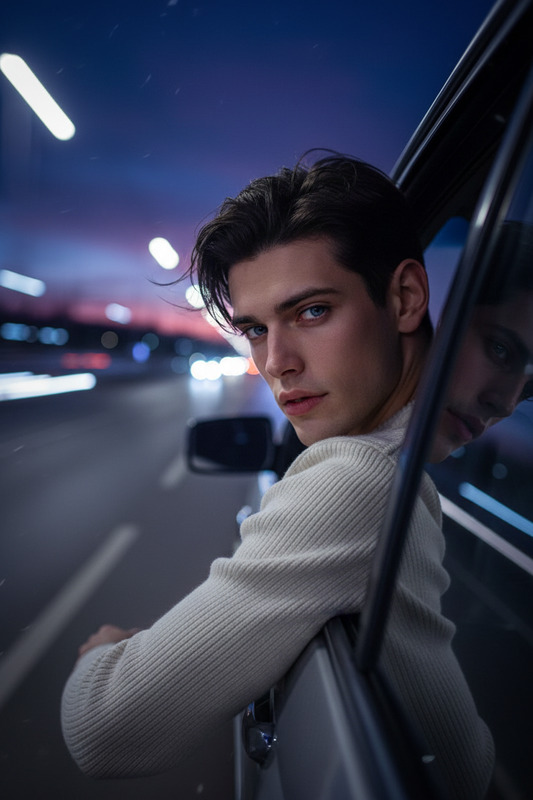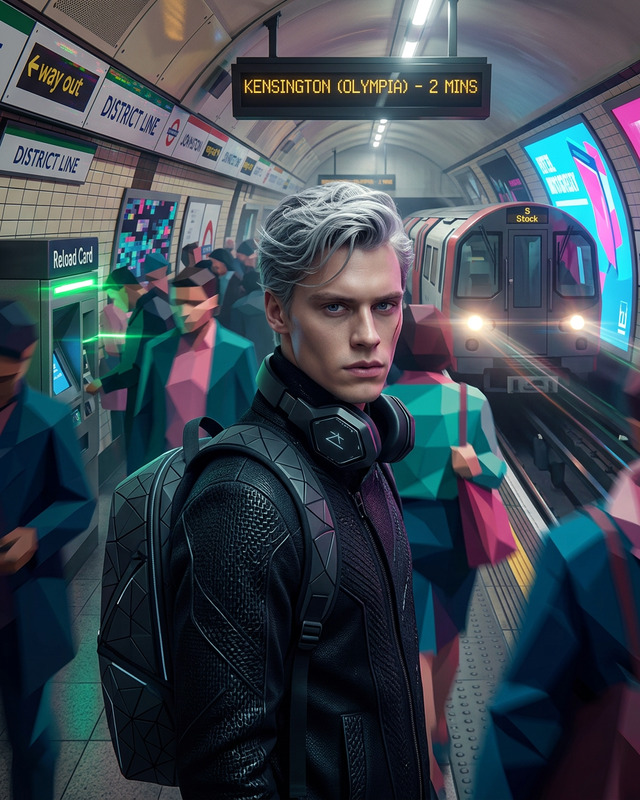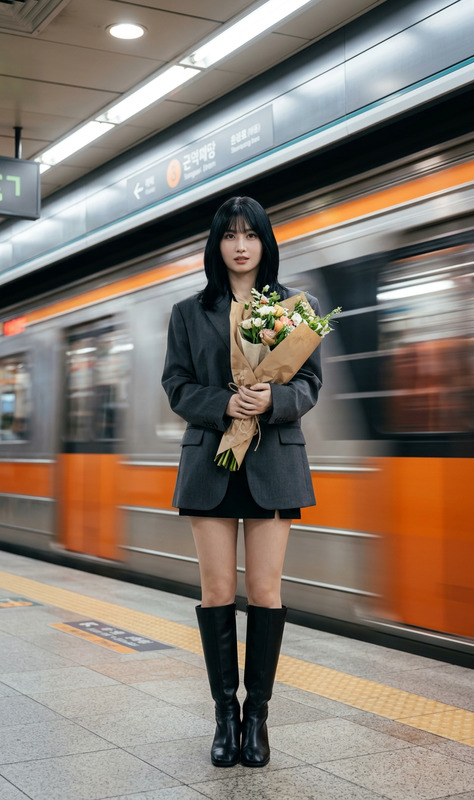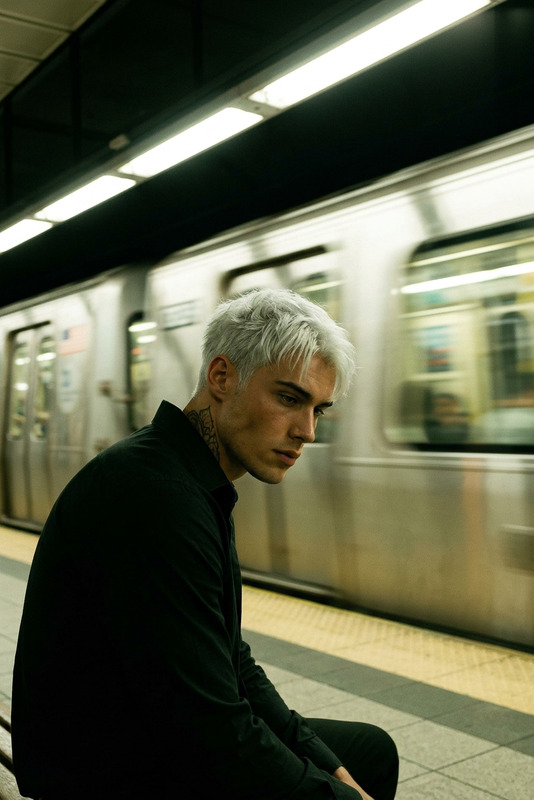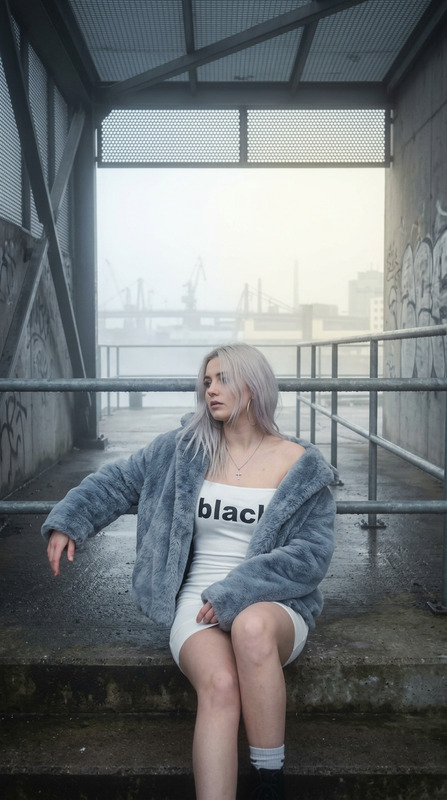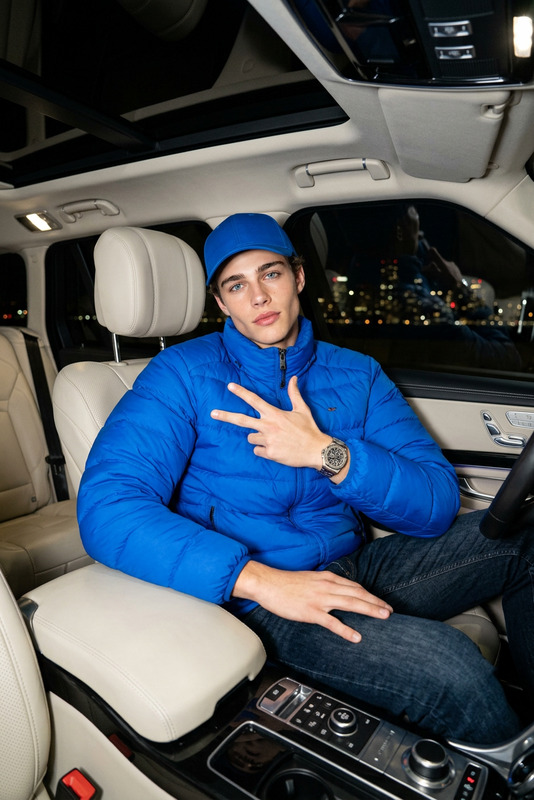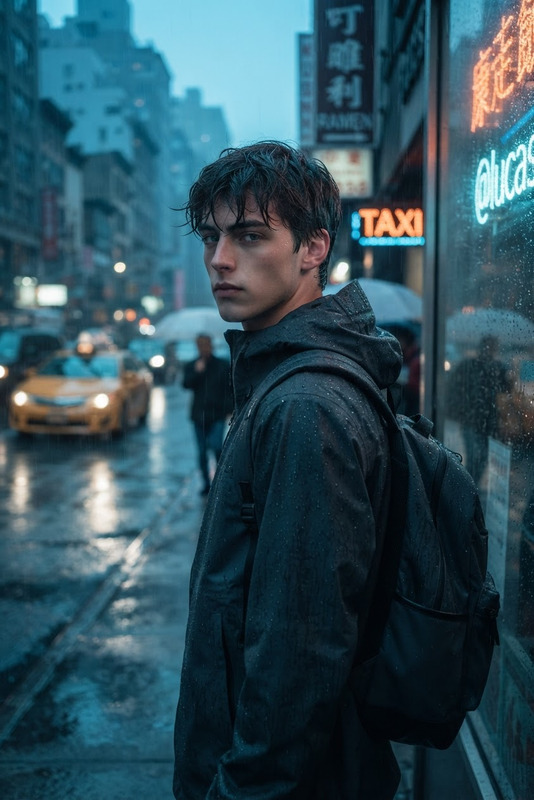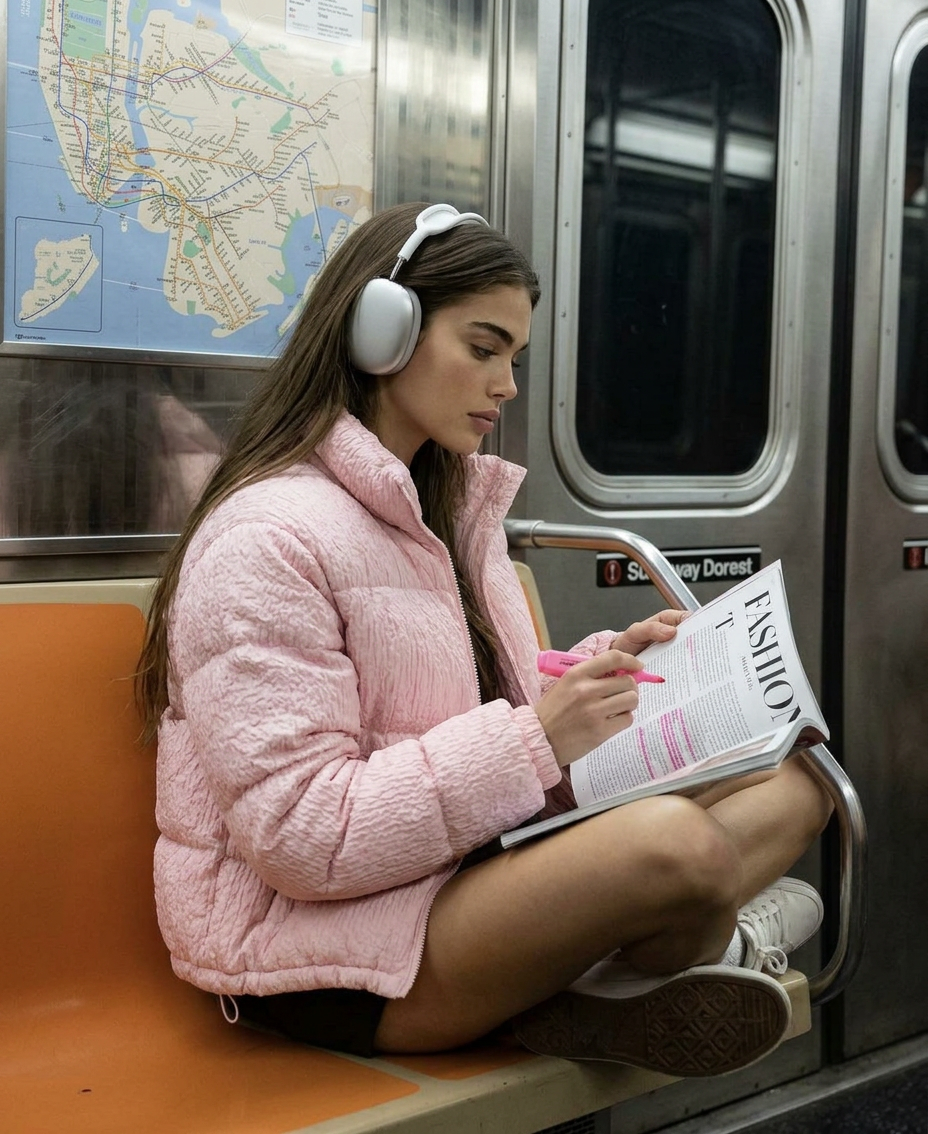
Night Ride Mood
- Model
- Nano Banana 2
- Image
- 928 × 1134 px
Prompt
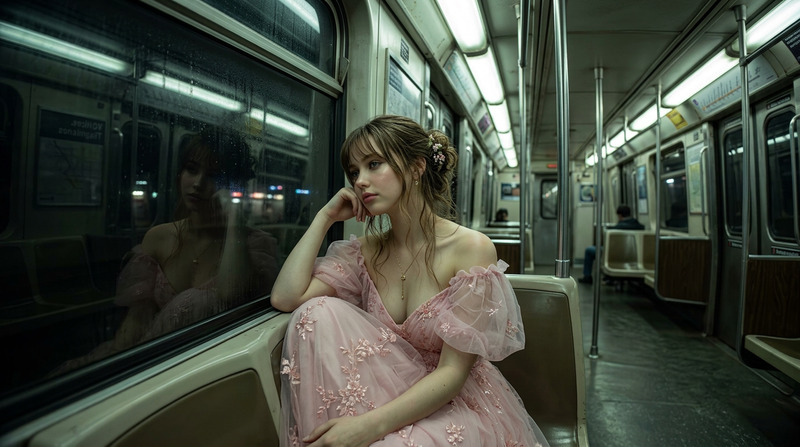
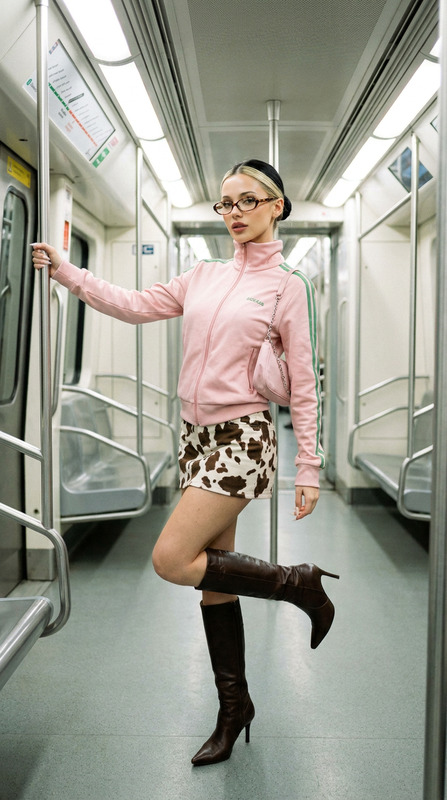
Generate a cinematic side-view fashion portrait inside a subway car, showing a subject sitting cross-legged on muted pastel-colored seats along the car wall, wearing a puffy baby-pink jacket with detailed fabric texture and silver over-ear headphones; the subject is holding an open fashion magazine and a highlighter, appearing absorbed in reading with a soft, dreamy, intimate expression; the subway interior features consistent muted seating stretching across the frame, a clearly framed subway map positioned above, and the edge of a subway door visible on the right; outside the window is the dark subway tunnel reflecting soft interior lighting, creating a calm nighttime atmosphere; casual layered streetwear fits naturally with relaxed, anatomically correct posture; soft diffused subway lighting gently illuminates the scene, emphasizing fabric detail, natural skin tones, subtle reflections on glass and handrails, and an immersive, cozy urban transit mood.
Any aspect ratio
Overview
Welcome to the Night Ride Mood template, crafted to capture the tranquil essence of an urban subway journey. Designed specifically with the AI Image Editor, this template leverages the nano-banana-2 model to produce a visually striking image of a fashion portrait set inside a subway car. With a focus on rich textures and soft lighting, it brings your fashion visuals to vivid life.
What It Does
This AI-powered template creates a cinematic fashion portrait within a subway environment. Utilizing advanced image editing algorithms, it adds intricate fabric textures, natural skin tones, and detailed lighting effects to your images. The result is a high-quality, side-view portrait that embodies the peaceful allure of a nighttime ride, perfect for mood boards or promotional materials.
Who It's For
The Night Ride Mood template is designed for professionals and enthusiasts in the fashion and creative industries. Whether you're a fashion photographer seeking unique visual styles or a content creator looking to enhance your portfolio with urban-inspired imagery, this template meets your needs. Ideal for anyone aiming to create engaging product visuals or immerse audiences in a cozy, metropolitan atmosphere.
Summary
Utilize the Night Ride Mood template to transform your visuals with precision-crafted subway settings. Elevate your content with the intimacy of urban transit scenes, achieved through AI Image Editing. This template is a powerful tool for creating soothing yet sophisticated imagery reflective of city life.
How To
Choose the Night Ride Mood Template

Customize Your Image

Generate and Download

Use Cases
Fashion Campaigns
- Highlighting fabric textures
- Urban-themed marketing
Social Media Content
- Instagram and Pinterest posts
- Engaging with urban lifestyle aesthetics
Mood Boards and Storyboards
- Film pre-production
- Visual concept development
Best Practices
Focus on Clothing Details
Prioritize fabric texture and lighting adjustments to add depth and authenticity to the clothing depicted.Embrace Urban Lighting
Utilize the soft, ambient lighting to replicate real-world subway conditions, emphasizing reflections and natural skin tones.Consistency with Urban Themes
Ensure that additional elements, such as props and background details, fit seamlessly with the urban transit theme.