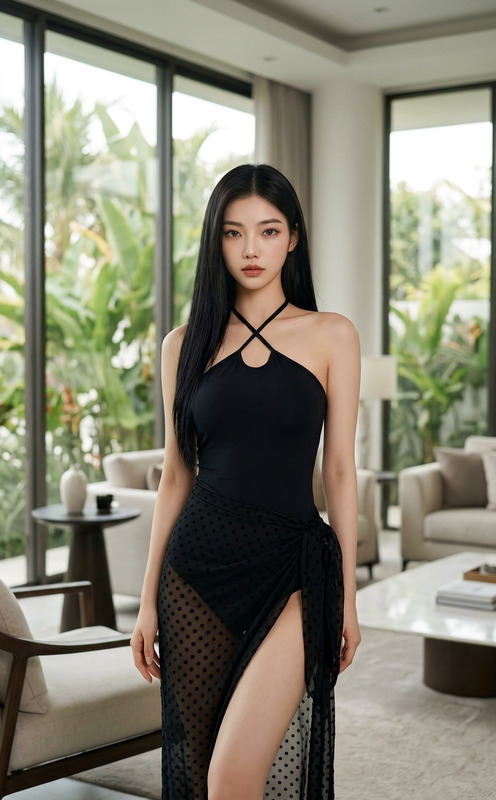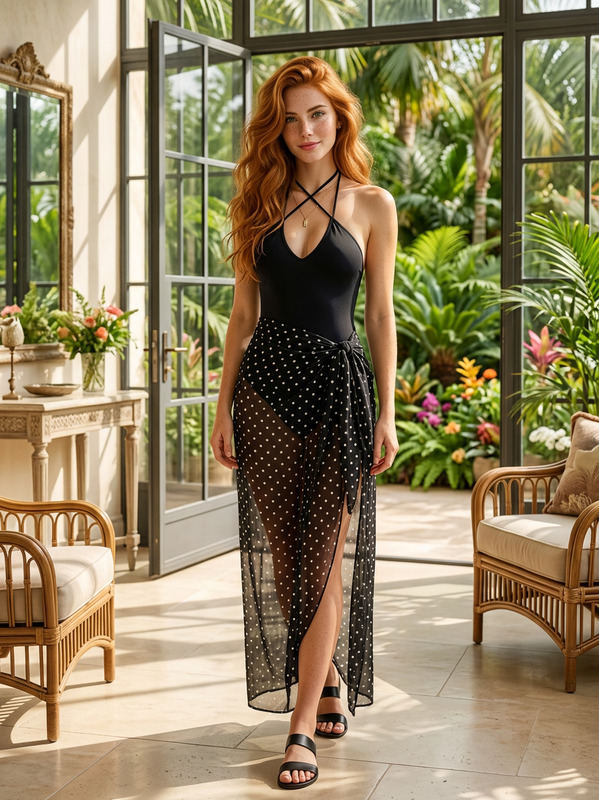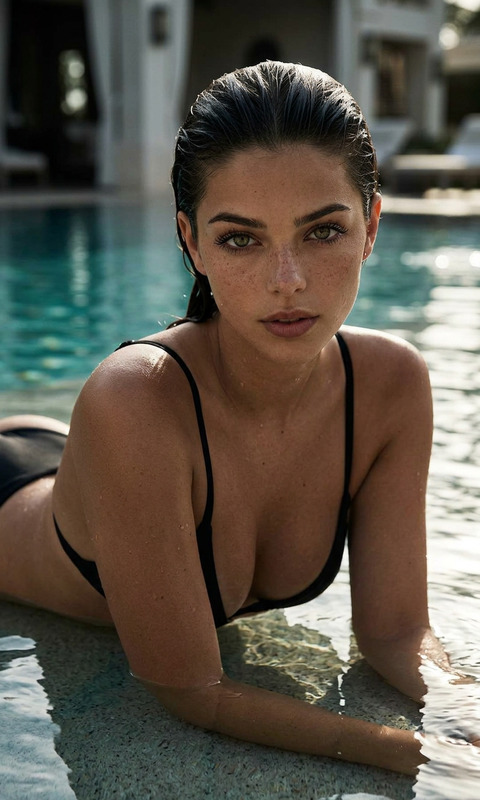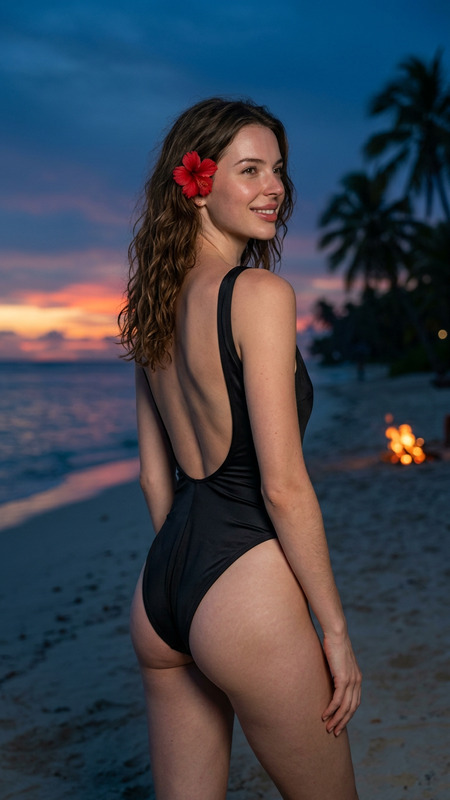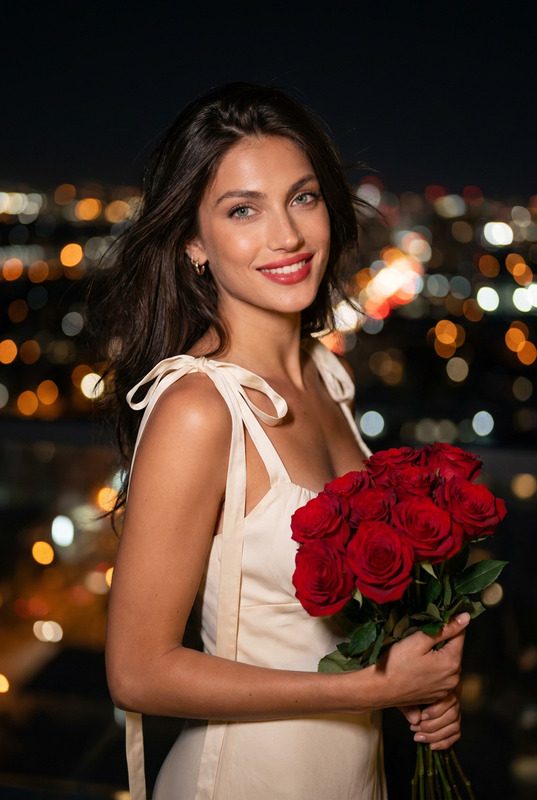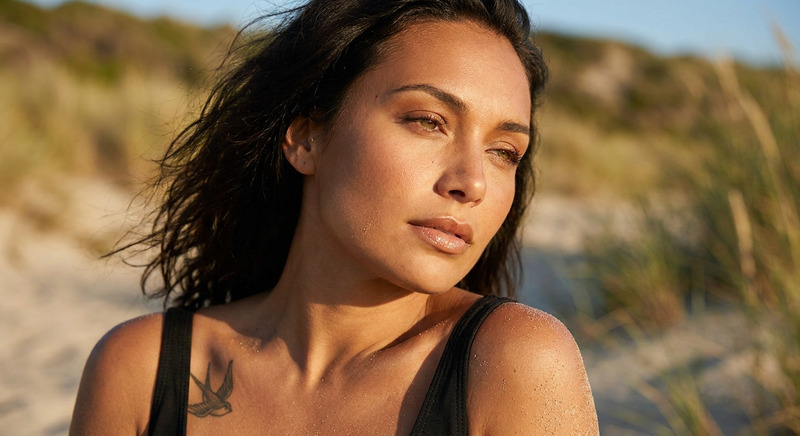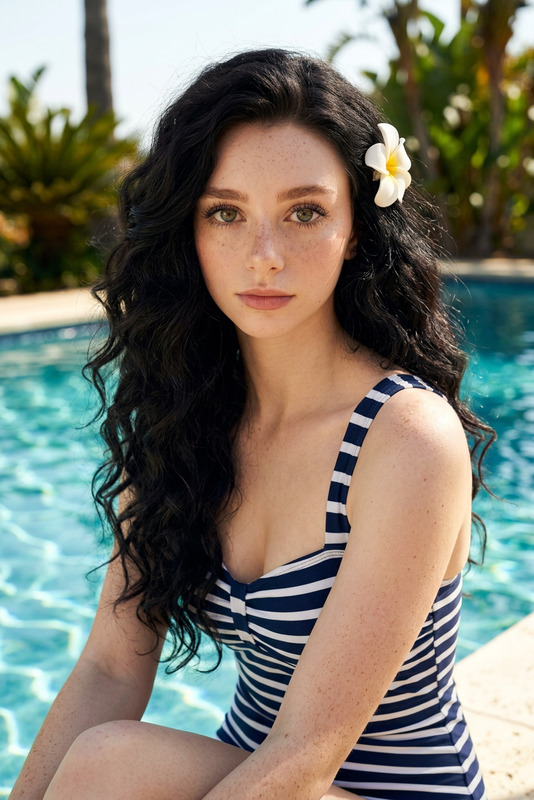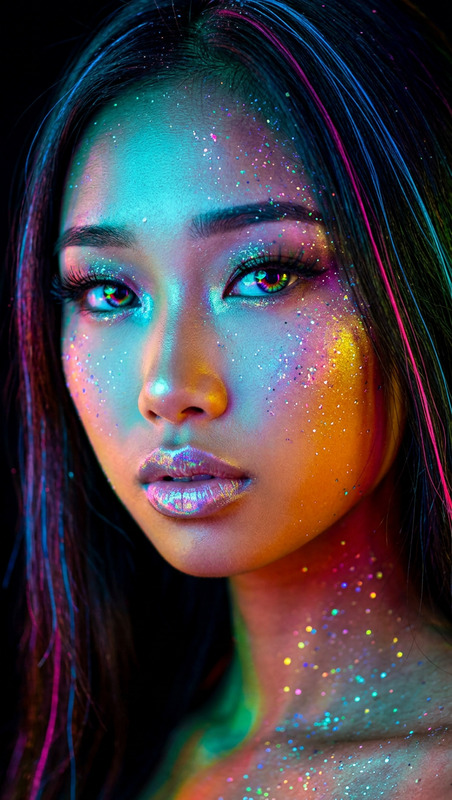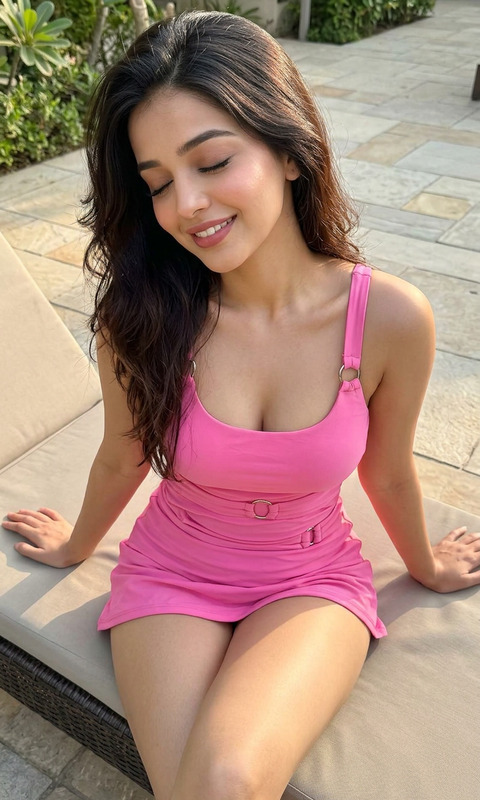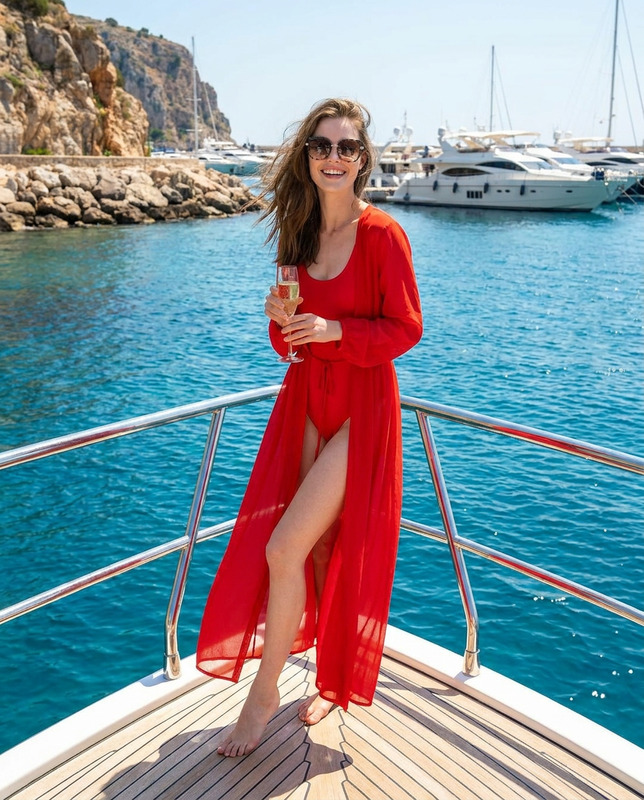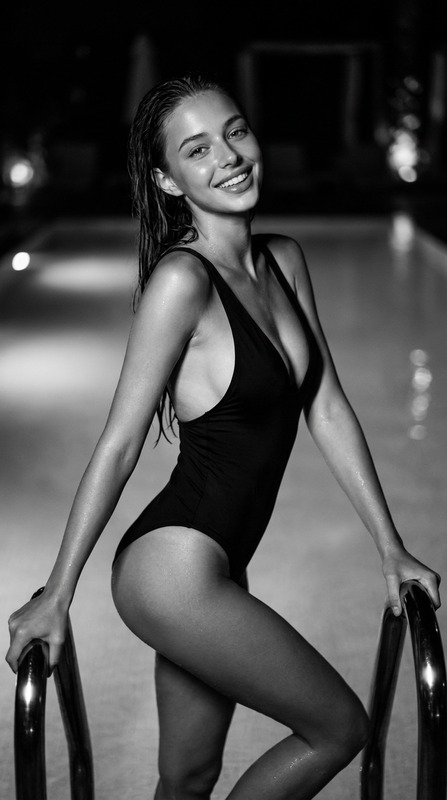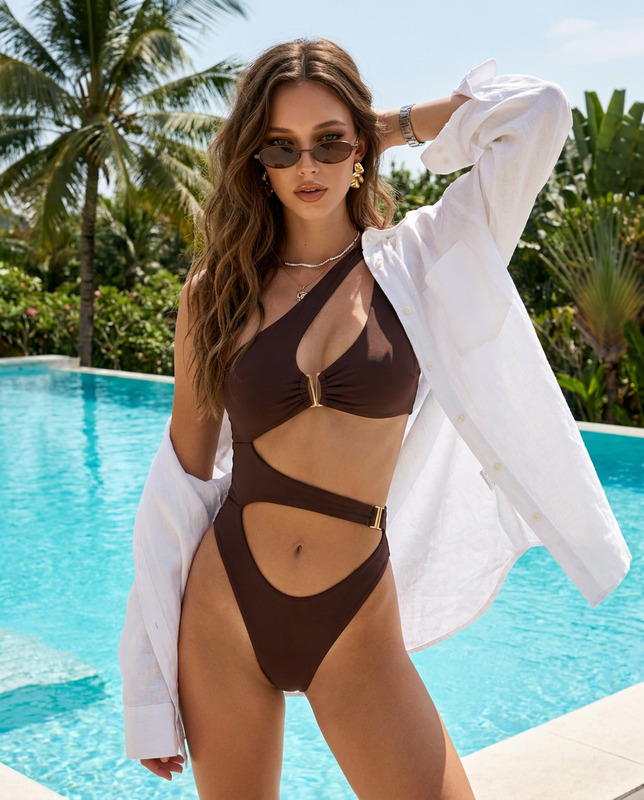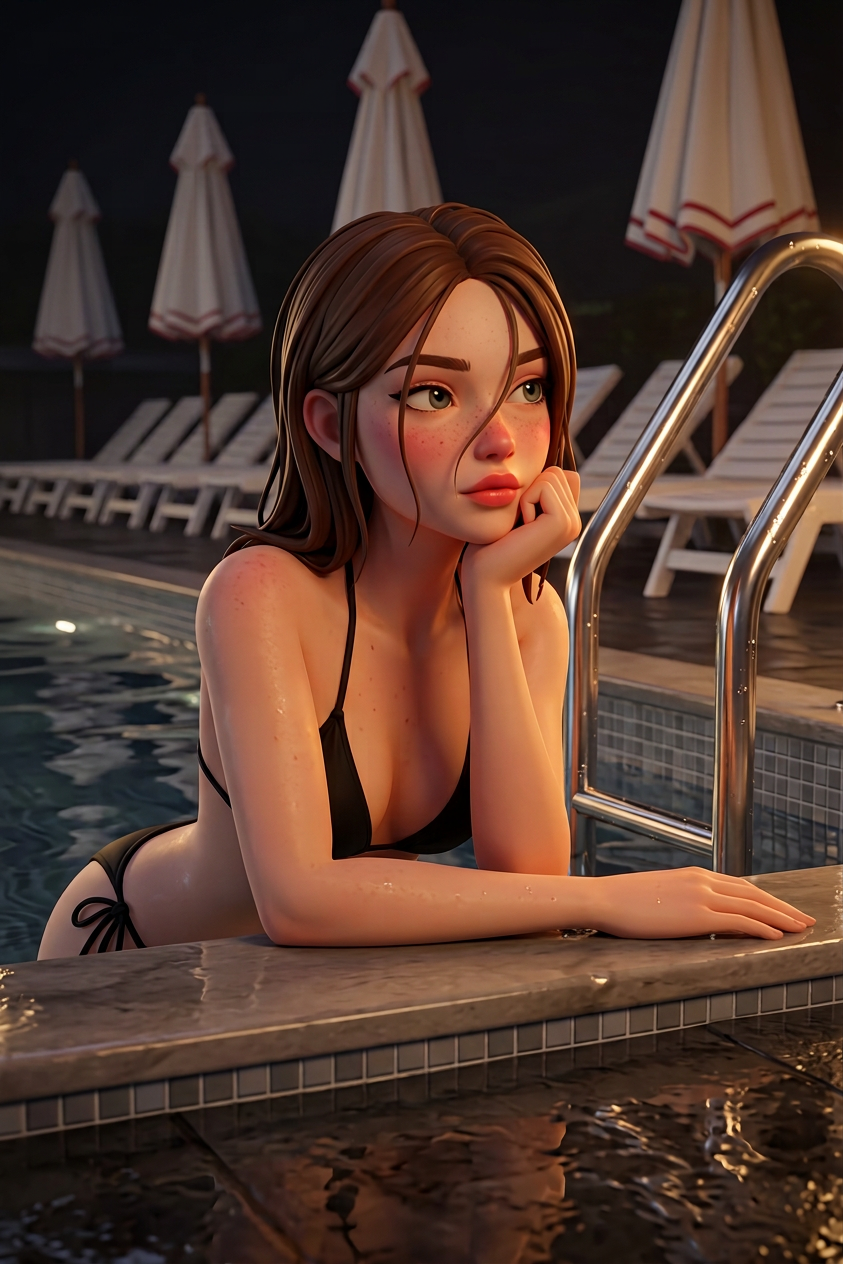
Night Pool Stylized Portrait

Night Pool Stylized Portrait

ai-image-editor

1 clip
23 uses

Any aspect ratio

Prompt

Create a realistic portrait of a young adult subject (keep face and appearance 100% identical to the reference — do not alter identity, structure, or proportions). The subject is in a nighttime pool scene beside a metal pool ladder, wearing a black string-tie bikini. Hair matches the reference, with a small strand falling across the face. Left arm resting on the pool edge, chin placed on the right hand. Looking to the side with a cute, dreamy, slightly pensive expression. Soft pink blush, rosy cheeks and nose, full pink-peach lips. Background includes small gray square pool tiles, folded white umbrellas with red trim, and a row of white lounge chairs. Warm dim pool lighting creates a soft cinematic glow on water and skin. Geometric shape-based rendering combined with stylized 3D (Fortnite/Overwatch-inspired vibe), highly detailed, smooth lighting, subtle reflections, night atmosphere.

Tags

styles

AI Image Editor Template: Turn Any Photo Into a Polished, On‑Brand Visual in Minutes

Use this AI Image Editor–based template to transform raw images into production‑ready visuals for product pages, ads, social posts, thumbnails, and pitch decks—without needing Photoshop skills.


What This Template Does

This template is built on the AI Image Editor and is designed to help you:

  • Clean up and enhance product photos, headshots, and lifestyle images
  • Change or remove distracting backgrounds
  • Add, remove, or replace objects (logos, devices, props, text, etc.)
  • Refine lighting, color, and composition for a more “studio” look
  • Create multiple branded variations from a single source image

It’s ideal for:

  • Marketers building high‑performing ad creatives and landing pages
  • Creators designing thumbnails, covers, and social carousels
  • Founders and teams polishing decks, app mockups, and product shots
  • Developers and designers iterating on visuals before handing off to design teams

How to Use (and Remix) This Template in Magic Hour

You can treat this template as a starting point and quickly adapt it to your own workflow.

  1. Open AI Image Editor
    Go to the AI Image Editor. Upload any JPG or PNG you want to improve—product photo, portrait, UI mockup, illustration, etc.

  2. Apply the Template’s Core Flow
    This template is based on a simple, reusable sequence:

    • Import your base image
    • Describe what you want to change in natural language (e.g., “Replace the background with a minimalist white studio,” “Remove the text from the banner,” “Add a laptop on the table,” “Make colors more vibrant and cinematic”)
    • Let the model generate a new version while preserving the original structure and subject
  3. Remix It for Your Own Use Case
    To create a customized version of this template for your brand or project:

    • Reuse the same input image type (e.g., product on plain background, portrait, flat lay, UI screen)
    • Keep a consistent style description across edits—e.g., “soft studio lighting,” “bold ecommerce hero,” “clean SaaS dashboard mockup,” “cinematic portrait,” etc.
    • Save a set of core prompts you repeat (for background style, color grading, object positions) so every new image you edit looks consistent
  4. Chain with Other Magic Hour Tools (Optional)
    Once you’ve edited your base images, you can:


Practical Use Cases

1. Ecommerce & Product Marketing

Use this template to quickly:

  • Turn phone photos into high‑quality product images
  • Create multiple background variations for A/B testing (studio white, lifestyle, flat lay, seasonal themes)
  • Localize creatives for different markets by swapping packaging, currencies, or visual references

Relevant tools to combine with this template:


2. Personal Branding, Headshots, and Avatars

Upgrade your existing photos instead of scheduling a new shoot:

  • Clean distracting backgrounds and replace with professional studio looks
  • Adjust lighting, color, and contrast for LinkedIn‑ready portraits
  • Create consistent “team page” visuals across different source photos

Tools that pair well:


3. Content Creators: Thumbnails, Covers, and Social Visuals

Creators can use this template to:

  • Refine YouTube thumbnail backgrounds, add attention‑grabbing props, or remove clutter
  • Turn basic screenshots into polished app or dashboard mockups
  • Add stylized text spaces or “frame” areas where you’ll overlay titles later

Useful related tools:


4. Design, Prototyping, and Concept Art

If you’re a designer or developer, you can remix this template to:

  • Quickly iterate on layout, color, and style for UI or brand concepts
  • Replace rough placeholders with more realistic visuals to improve stakeholder feedback
  • Generate alternate compositions, camera angles, or lighting concepts

Complementary tools:


How to Create Your Own “Template‑Like” Workflow

Magic Hour doesn’t require rigid templates—you can turn this into a repeatable editing system:

  1. Standardize Inputs
    Decide what type of source images you’ll usually feed into AI Image Editor (e.g., product shots at 3/4 angle, waist‑up portraits, 16:9 UI mockups). Keeping inputs consistent makes results more predictable.

  2. Codify Your Style Language
    Write down the style phrases that define your brand or aesthetic:
    Examples: “minimalist, high‑key lighting,” “bold, contrasty cyberpunk,” “warm, editorial magazine look,” “clean SaaS hero, lots of negative space.”
    Reuse these phrases in your edit prompts so the editor acts like a reusable style template.

  3. Define Reusable Editing Patterns
    Common patterns that map well to this template:

    • “Replace the background with…”
    • “Remove [object] from [area]”
    • “Add [object] near [subject]”
    • “Make the colors more [descriptor] while keeping the subject realistic”
    • “Turn this into a social‑media‑ready visual with space for text on the [side]”
  4. Create Sets of Branded Variations
    For each base image, generate several variations:

    • Different backgrounds for different channels (website, ads, socials, presentation decks)
    • Seasonal or campaign‑specific looks (holiday, launch, dark mode, event‑themed)
    • Different crops for vertical, square, and horizontal placements
  5. Export and Chain to Video or Other Assets
    Once you have final stills:


Combining This Template with Other Magic Hour Workflows

This AI Image Editor template is often a “middle step” in a larger pipeline:


Why Use Magic Hour’s AI Image Editor for This

Compared to editing manually or using single‑purpose apps, an AI‑driven approach:

  • Speeds up iteration: you can test multiple creative directions in minutes
  • Preserves structure: you keep layout and key subjects while changing context and style
  • Lowers dependency on design resources: founders, marketers, and PMs can produce good visuals themselves
  • Integrates with a broader toolset: you can seamlessly move from image editing to video, voice, and animation inside the same ecosystem

For more specialized transformations, consider:


Getting the Most Out of This Template

To maximize quality and consistency:

  • Start with the highest‑resolution source image you reasonably have
  • Use clear, specific instructions for each edit (what to add/remove, where, and in what style)
  • Keep a living “style guide” of prompts you know produce on‑brand results
  • Treat each successful run as a new variation of your template that you can reuse across future projects

Open the AI Image Editor, upload a sample image from your current project, and walk through the core flow once. From there, save your best prompts and turn this template into your own reusable, brand‑aligned image editing system.

More Like This

Insufficient credits