10 profile picture ideas: professional, creative & clear


Quick answer
The safest profile-picture choice is a clear, recent portrait with simple framing, visible eyes and enough contrast to remain recognizable in a small circular crop. Use a polished headshot for professional identity, a candid or environmental portrait for a creator profile, and an illustration or symbol only when literal recognition is not required.
Choose the account’s job before the style. A recruiter, customer, community member and gaming friend need different identity signals. These ten ideas are production patterns, not promises of more clicks or trust.
Choose your profile picture by context
Professional identity: use a current head-and-shoulders portrait with restrained retouching and a neutral or contextual background.
Creator or founder: use a recognizable portrait with one visual detail connected to the work.
Personal social account: a candid, hobby or pet co-star can communicate personality if the face remains clear.
Pseudonymous community: use a distinct illustration or symbol that remains legible at tiny size.
Brand account: use an official mark or character with enough clear space; do not imitate another brand or person.
Create a profile-picture set
Upload clear source photos, generate one restrained set, and preview the result at actual avatar size before choosing the final image.
Try AI Headshot Generator1. A clean professional headshot
Use even light, a calm expression, a simple background and a crop from the chest or shoulders upward. A current photo matters more than extreme smoothing. The Magic Hour AI Headshot Generator can produce variations from clear source images; compare identity, skin texture, hair, glasses, teeth and clothing before choosing one.

2. A candid working portrait
Show one real action connected to the account: presenting, drawing, cooking, photographing or building. Keep the face large enough to recognize after cropping. Remove background clutter that competes with the subject.
3. A bold solid background
Choose one color that contrasts with hair, clothing and the app interface. Use the AI Background Changer when the portrait is good but the setting is distracting. Confirm that the edit preserves the face, hair, clothing and edge detail.

4. A close crop with eye contact
Crop closer when the expression is the message. Leave room for a circular mask and platform overlays. Do not crop through the chin, eyes or distinctive hair unless the editorial effect remains recognizable at thumbnail size.
5. An illustrated self-portrait
Use the AI Selfie Generator for a deliberate style such as editorial illustration, anime or graphic poster treatment. Retain enough facial structure, hair and accessories for recognition, and avoid presenting a synthetic image as documentary evidence.

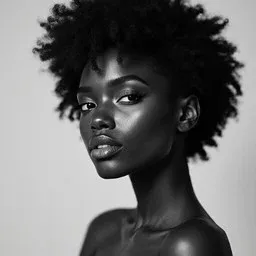
6. A black-and-white portrait
Monochrome can simplify a busy source and create consistent contrast across profiles. Check that dark hair, clothing and the background do not collapse into one shape. Keep a color original for contexts where accurate appearance matters.
7. A hobby or pet co-star
Include one meaningful object, pet or instrument while keeping the account owner visually primary. Use a clean composition; several small props disappear at avatar size and make the face harder to identify.
8. An environmental portrait
Use a studio, workshop, stage, kitchen or outdoor setting as evidence of context. Blur or simplify confidential screens, addresses, badges and bystanders. The environment should support the identity rather than become the subject.
9. A transparent cutout in a designed frame
Start with the Background Remover to create a transparent subject, then place it in a circle, border or branded field. Inspect hair and clothing edges on both light and dark colors before exporting. Leave safe space so automatic circular crops do not cut into the face.
10. A restrained animated avatar
Use motion only on a platform and plan that actually displays animated profile images. A short blink, wave or expression change is easier to recognize than a busy loop. The AI GIF Generator can create the asset; verify file-size, duration, crop and whether the platform freezes the first frame.

A five-minute profile-picture check
Preview at 32, 48 and 96 pixels. If the identity disappears, simplify the crop or background.
Apply a circular mask. Keep eyes, hair, glasses and chin inside the safe area.
Check light and dark interfaces. Add a border or change the background if the silhouette disappears.
Compare with the source. Reject changed facial geometry, skin tone, hairline, teeth, glasses, jewelry or clothing.
Remove private details. Inspect reflections, badges, screens, documents and location clues.
Match the current person or brand. A profile image should not create identity confusion merely because an older or more dramatic result looks polished.
Export for the destination before making another image
Destination | Dimensions and file | Upload check |
|---|---|---|
At least 400 × 400 pixels; PNG or JPG; up to 8 MB | GIF is not supported. A photo or illustration must reflect your likeness. | |
Recommended 400 × 400 pixels; JPEG, GIF or PNG; up to 2 MB | Select Apply after upload. Accepted GIF files do not establish animated-profile playback. |
Requirements checked against the linked official help pages on October 10, 2026. Keep a larger master image, then export a square copy that meets the destination’s size and format limits. If an otherwise good portrait will not upload, check bytes, dimensions and file type before spending credits on another generation. Preview the platform’s final crop before saving.
Edit without losing identity
Use an AI Image Editor for a bounded change such as simplifying the background, adjusting the crop or removing one distraction. Change one thing at a time and compare against the source. Heavy face replacement or beautification can make a professional image less trustworthy even when it looks technically clean.
For portrait-tool selection, use our headshot generator comparison. To compare dedicated portrait products, see the AI headshot generator guide.
Frequently asked questions
It is recognizable at a small size, matches the account context, has clear facial or brand detail, survives a circular crop and does not misrepresent identity.
Use an expression that fits the role and still looks natural. Clarity, current identity and appropriate presentation matter more than one universal expression.
Yes, when the context permits it. Review identity accuracy, disclose synthetic imagery when it could mislead, and use a real current portrait where authentication or documentary trust matters.
Export a clear square master larger than the displayed avatar, then follow the current platform requirement. Preview the actual small and circular rendering instead of judging only the full-resolution file.


